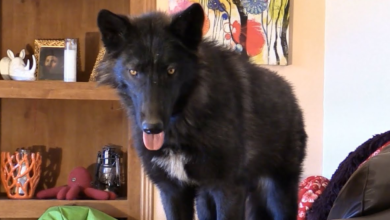
Have you ever noticed your dog sniffing you more than usual? Or perhaps a dog you’ve never met before showed unusual interest in a specific part of your body? While it might seem awkward or random, science is revealing something extraordinary: dogs may actually be detecting health issues that even doctors can’t easily find.
The Nose That Knows: How Powerful Is a Dog’s Smell?
To understand why dogs can detect disease, you first need to appreciate just how extraordinary their sense of smell is. While humans have about 6 million olfactory receptors, dogs have up to **300 million**. Their brain’s smell-processing area is proportionally 40 times larger than ours.
In practical terms, a dog can detect a teaspoon of sugar dissolved in a million gallons of water. They can smell in parts per trillion — a level of sensitivity no machine has yet matched.
This biological superpower is why dogs have been trained for decades to detect explosives, drugs, and missing persons. But in recent years, researchers have turned their attention to something even more remarkable: disease detection.
Dogs and Cancer: The Evidence Is Growing

Perhaps the most studied area is cancer detection, and the results are stunning.
Breast Cancer
One of the most significant recent developments is an ongoing clinical trial by a company called **SpotitEarly**, which is testing whether trained detection dogs combined with artificial intelligence can identify breast cancer simply from a woman’s **breath sample**. Women breathe into a surgical mask, which is then sent to a lab where trained dogs analyze it. Early results are highly promising, and the study is currently recruiting participants.
Research has consistently shown that dogs can detect the unique volatile organic compounds (VOCs)** — essentially chemical odors — that cancer cells release into the body. These compounds travel through the bloodstream and eventually exit through breath, urine, and skin.
Studies have found that dogs can detect breast cancer odor signatures with impressive accuracy, identifying samples from women with cancer versus healthy women with remarkable consistency.
Cervical Cancer
This is where research gets particularly relevant for women’s health. A study published in scientific literature found that trained sniffer dogs could accurately detect cervical cancer from **urine samples**, even at early precancerous stages (cervical intraepithelial neoplasia grade 3).
Another study found that dogs could detect cervical cancer-related compounds in material absorbed by **intimate sanitary pads** after just 8 hours of use — a completely non-invasive approach that could one day revolutionize screening, especially in countries where gynecological exams face cultural barriers.
In Mexico, where cervical cancer rates are alarmingly high, researchers demonstrated that trained dogs could distinguish between healthy women and those with cervical cancer with high accuracy — offering hope for a faster, cheaper, and more accessible screening method.
Multiple Cancers at Once

A 2024 study published in *Scientific Reports* explored using canine olfaction combined with AI to screen for*multiple cancers simultaneously from breath samples. Meanwhile, research in India registered in 2024 is testing dogs across diverse populations to detect various cancer types — from breast to colorectal — using breath analysis.
One widely cited study found that dogs achieved nearly **97% accuracy** in detecting cancer from blood samples, outperforming many conventional early-detection methods.
Beyond Cancer: Other Health Conditions Dogs Can Detect
Cancer is just the beginning. Research suggests dogs can also detect:
Hormonal changes — Many women report their dogs behaving differently during pregnancy, even before a positive test. Dogs can likely detect the hormonal shifts that occur in early pregnancy through changes in body odor.
Menstrual cycle changes — Dogs are highly sensitive to hormonal fluctuations throughout the menstrual cycle, which may explain why some dogs behave protectively or differently at certain times of the month.
Diabetes — Dogs trained as diabetic alert dogs can detect drops in blood sugar (hypoglycemia) before symptoms appear, giving their owners life-saving warning.
Infection — Dogs have been shown to detect bacterial and viral infections, including COVID-19, with high accuracy.
Migraines — Some dog owners report their pets alert them before a migraine begins, possibly detecting subtle physiological changes that precede the headache.
Why Are Women Specifically Mentioned in Research?

Many studies specifically focus on women because several cancers that dogs have been most successfully trained to detect — **breast cancer and cervical cancer** — are female-specific. Women also experience unique hormonal cycles that produce distinctive chemical signatures, making them particularly interesting subjects for olfactory research.
Additionally, many women notice their own dogs paying unusual attention to their bodies during pregnancy, illness, or other health changes — leading researchers to investigate whether this behavior reflects genuine detection ability.
What This Means for the Future of Medicine
The implications are enormous. Current cancer screening methods — mammograms, biopsies, Pap smears — are expensive, sometimes painful, and not always accessible worldwide. A breath or urine test analyzed by trained dogs (or eventually AI trained on canine detection patterns) could offer:
– Early detection at stages when treatment is most effective
– Non-invasive screening with no pain or radiation
– Low cost compared to traditional diagnostic tools
– Accessibility in developing countries where medical infrastructure is limited
Researchers are now working to identify exactly which chemical compounds dogs are detecting, with the goal of creating **electronic noses** — AI-powered devices that mimic canine olfactory ability at scale.
Should You Pay Attention When Your Dog Sniffs You?

While you shouldn’t panic every time your dog shows interest in a particular spot, persistent, unusual sniffing behavior — especially if your dog keeps returning to the same area — is worth noting. Several documented cases exist of pet owners discovering cancer after their dog repeatedly sniffed or nuzzled a specific area of their body.
The general advice from medical professionals: **don’t replace regular health screenings with your dog’s behavior**, but do take unusual, persistent sniffing seriously enough to mention it to your doctor.
Conclusion
What we once dismissed as a dog being “just a dog” is turning out to be one of nature’s most sophisticated diagnostic tools. The relationship between canine olfaction and human health detection is opening doors to a new era of non-invasive, early disease screening.
The next time your dog seems unusually interested in sniffing you, remember: they might be telling you something important. Science is finally starting to listen.
Did you find this article helpful? Share it with someone who loves dogs — and their health! Leave your thoughts in the comments below.*
Sources: Medical News Today, ClinicalTrials.gov (SpotitEarly PINK Study), Cancer Health, NIH PubMed, Scientific Reports (Nature), medrxiv.org